Urban Youth Collaborative: Interim Director Search

By home, UP

LEARN MORE

We’re Looking A Dynamic Leader
About UYC

The Urban Youth Collaborative (UYC) is a youth-led coalition committed to ending the school-to-prison and deportation pipeline and transforming public schools into supportive and equitable learning environments. Anchored by three dynamic organizations—Future of Tomorrow (FOT) of Cypress Hills Local Development Corporation, Make the Road New York’s (MRNY) Youth Power Project, and Sistas and Brothas United (SBU) of the Northwest Bronx Community and Clergy Coalition—UYC champions campaigns to create a brighter future for marginalized students in NYC.

Join the Urban Youth Collaborative (UYC) as Interim Director

Position: Interim Director
Location: New York City (Hybrid: In-person and virtual work)
Salary: $100,000 – $120,000 (commensurate with experience)
Benefits: Health insurance, 401K, generous paid time off through Make the Road NY

What You’ll Do

As Interim Director, you will play a pivotal role in rebuilding UYC by:

  • Driving the vision and mission of UYC in collaboration with anchor organizations.
  • Leading impactful campaigns to end the school-to-prison pipeline and promote equitable school policies.
  • Supporting youth leaders through training, leadership development, and political education.
  • Managing coalition operations, including communication, fundraising, and strategic partnerships.
  • Developing a strategic plan, hiring a lead organizer, and establishing a Steering Committee.


Who We’re Looking For

The ideal candidate is a visionary leader with:

  • 10+ years of grassroots organizing experience, with a strong focus on youth leadership.
  • Proven success in coalition-building and campaign coordination.
  • A track record of managing staff, budgets, and fundraising efforts.
  • A commitment to social justice and a passion for empowering young leaders.
  • Exceptional communication skills and the ability to drive projects from inception to completion.


Key Responsibilities

  • Advance UYC’s mission by assessing external political conditions and driving coalition efforts.
  • Coordinate youth-led campaigns, including strategy development, research, and public advocacy.
  • Oversee leadership development programs, including UYC’s annual Youth Organizing Institute.
  • Strengthen partnerships with allied organizations to maximize impact.
  • Manage administrative tasks, including grant applications, financial oversight, and team development.


Why Join UYC?

This role is an incredible opportunity to shape the future of youth-led organizing in New York City. You will work alongside passionate youth leaders and dedicated member organizations, tackling systemic injustices and driving meaningful change.


How to Apply

To apply, please send the following to search@universalpartnership.org by January 17, 2025:

  • A 1-2 page cover letter detailing your interest and qualifications.
  • Your resume.
  • 3-5 references who can speak to your experience and leadership abilities.


Timeline

  • Application Deadline: January 17, 2025
  • Hiring Decision: Mid-February 2025
  • Tentative Start Date: March 1, 2025

Join us in creating a movement that empowers youth and transforms public education. Apply today!

the world is at the feet of the mother

By home, UP+love

honouring & continuing a lifetime of service

Our beloved mother, Monsura “Mukti” Mohiuddin was the eldest daughter of Sabera Rahman & the father of the Bangladeshi Independence Movement, Mashiur “Jadu Miah” Rahman. Her name Mukti means liberation in Bengali. She was a former Member of Parliament who served & fought for poor people both as a historically elected official & as a citizen.

To continue Ammoo’s legacy of service towards liberation & love, we are establishing the Mukti Foundation, in our mother’s honour, an international institution to serve poor people.”

Rusia N. Mohiuddin  Founder & Co-Director, the Mukti Foundation

Learn more about the Mukti Foundation

the embody lab

By home, Leadership Dev., transformational

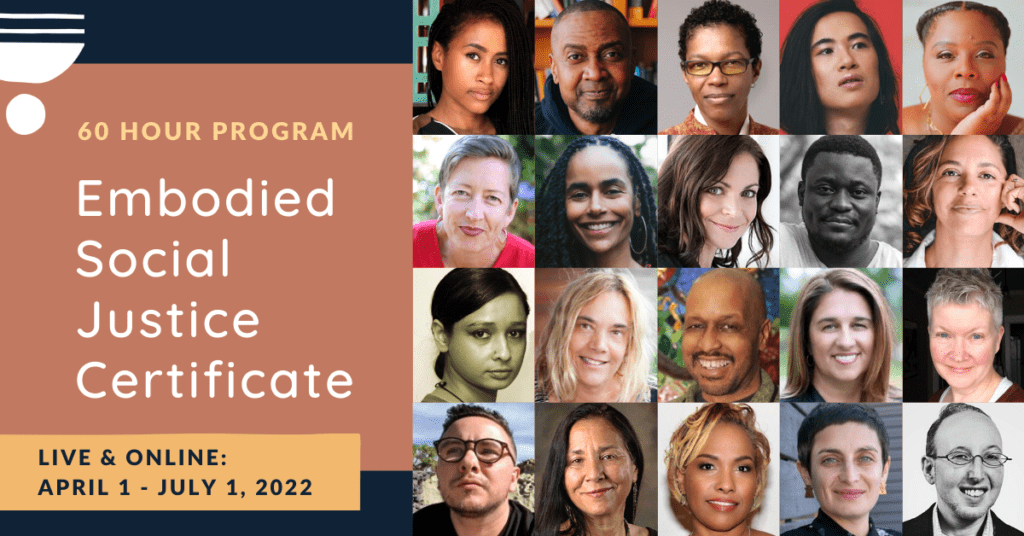
the embodied social justice 60 hr certification program

“Without inner change there can be no outer change. Without collective change, no change matters.” — REV ANGEL KYODO WILLIAMS

Are you ready to herald the awakening of a world ripe to respond to the social justice issues of our time? Are you committed to collective liberation, unlearning oppressive social systems, and restoring and repairing our social contract with one another?

Then we wholeheartedly invite you to our first-of-its-kind 60-hour Foundational Embodied Social Justice Certificate Program.

The Foundational Embodied Social Justice Certificate Program is a 3-month online program that explores how we embody unjust social conditions, how oppression affects our relationship with our body, and how we can harness the body’s wisdom in making our social justice work more grounded, responsive, and sustainable. The program brings together seasoned practitioners, elders, and community change agents to share strategies and offer tools in the collective work of transforming our bodies and our world. Offered by leading-edge teachers working at the intersection of embodiment and social justice, the program follows a simple structure of twice-weekly classes, practical workshops, and integrative learning conversations that culminate in a collaborative creative project focused on real-world applications.

A Depth Track is being offered this year as an add-on to the Foundational Embodied Social Justice Certificate program, and is only available to 2021 Certificate alumni and 2022 students enrolled in the Certificate program. The Depth Track is designed to deepen your knowledge in particular areas related to Embodied Social Justice. Learn more about the Depth Track below.

a year ago today…

By home, transformational

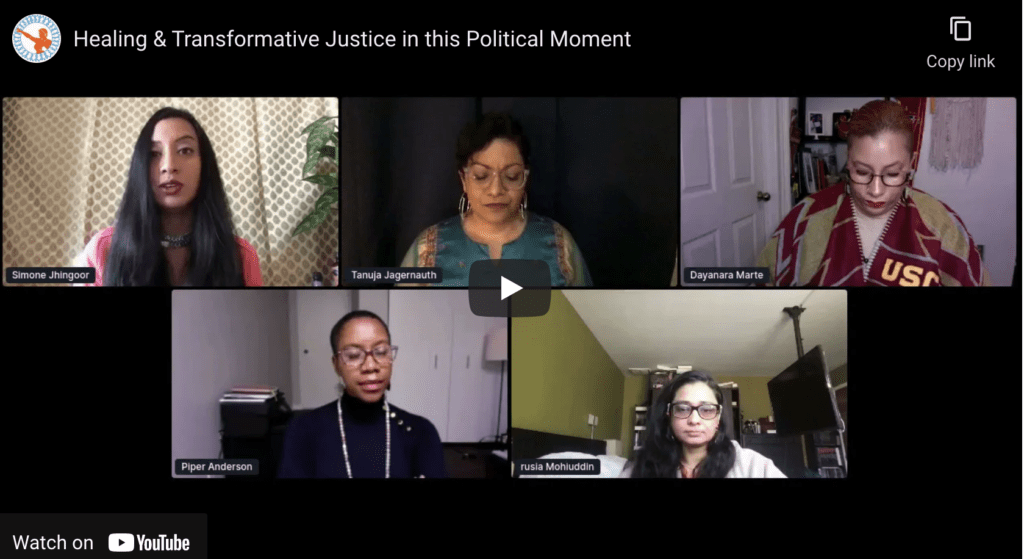
Jahajee Sisters: This plenary is from our 2020 Indo-Caribbean Women’s Empowerment Summit, “Building Our Future: Love & Solidarity as the Pathway to Justice” and took place on November 21, 2020. Justice in this Political Moment

come as you are

By approach, UP, UP+love, writings

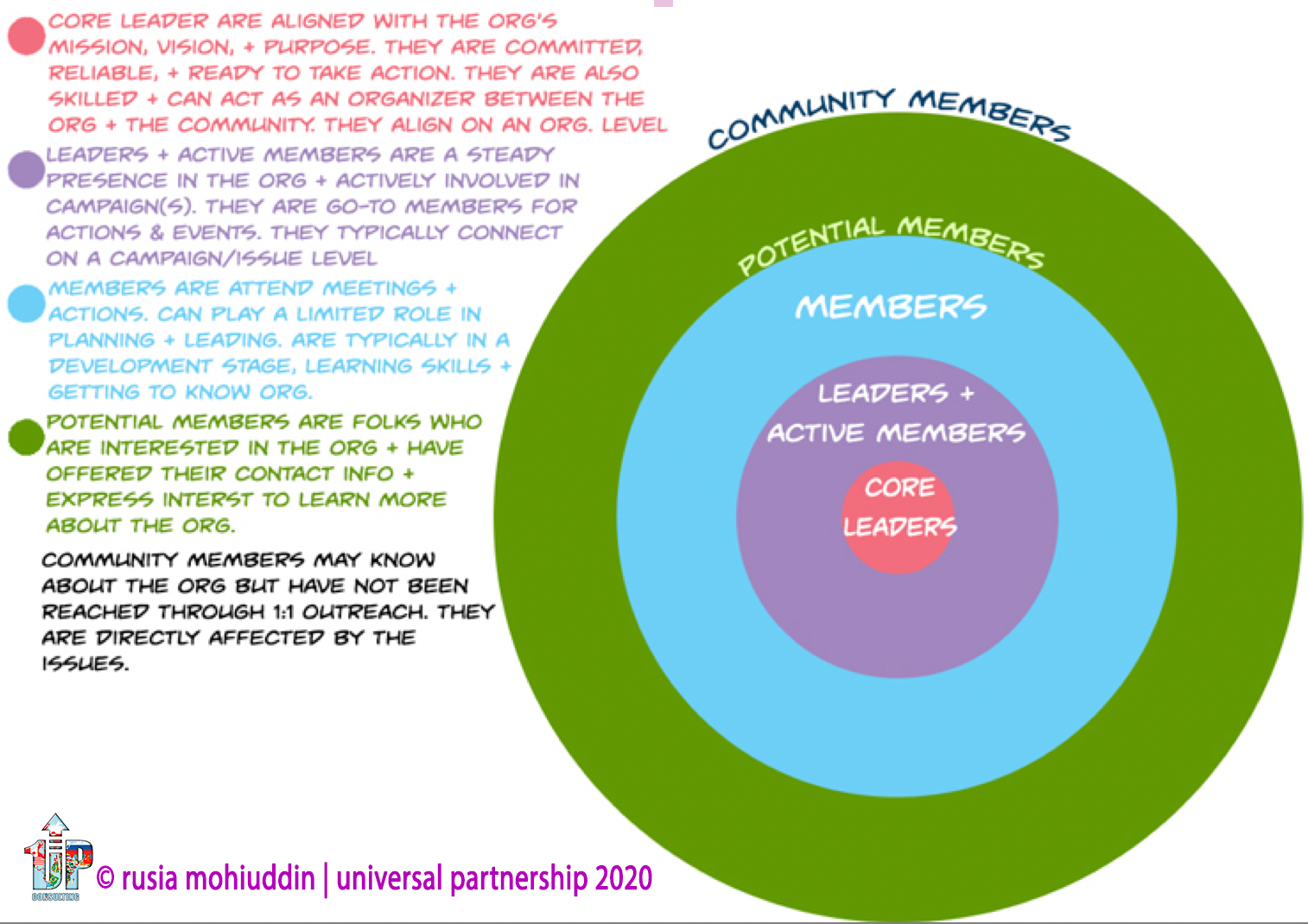
A good organizer knows that the fundamentals of base building teaches and guides us to recognize and understand we need all sorts of folks to participate in the change process. Successful organizing needs both the community member who comes to every meeting and takes leadership roles and the person, or warm body, who only shows up to actions and nothing else. Of course, the organizer pushes folks by way of creating opportunities for folks to take on more and more leadership roles and responsibilities but the good organizer never shames folks for not taking roles that are beyond their ability, comfort level, or choice.

UP’s Embodied Organizing: Effective Base Building Chart

Are these rich lessons from organizing translating in our movement cultures? By and large, yes and, often when the pressures of our toxic political environment reach an urgent point, we tend to fall into the crevices and some of us shift into a one trick pony stuck in fight mode. We’re seeing and virtually experiencing a lot of this during and post election day.

Technology is a massive form of how we communicate our thoughts and ideas and ultimately how we relate to one another. Exacerbated by a global pandemic, social media is a primary method of expression and how we reach folks. And, in these times of high stakes, it is both a gift and a curse. The ease in which folks post things that they would hesitate to or never directly express to people, well, that’s something to seriously reflect on, no? Because social media doesn’t require or leave much room for self-regulation especially because it both soothes and feeds our egos.

And here we find ourselves, forced to have chosen between two old white guys, to be the leader of our government, our country, us, neither of whom fully deserving to be the steward of our collective political, personal, financial wellbeing. For many of us in our movements, the dichotomies were absolute: fascist vs non fascist or 45 vs. not 45.

Once a winner was called, many of us reacted differently. Some celebrated, some continued to wince, some pushed to keep the work going, some did a combination of many things, and some critiqued those who were celebrating.

Nature is defined and made whole by contrast. As living beings, contrasts and duality are essential characteristics of humanity. Yet, like most things, culturally we push back on the nature of our beings, consciously or unconsciously, working to create mirror images of ourselves amongst those we’ve forged relationships with, creating this impossible metric to determine who’s on our side and who is not. Heterosexual men identified, tend to lean towards this more than others despite being among the minority of folks who make up our movements.

The coded messages behind the critiques of how folks reacted to the Biden/Harris win weren’t all that subtle. Regardless of the specificity of those critiques, most were a call to share a political identity, one that is unique to the particular person. But how are we defining and understanding our political identity?

Image for post

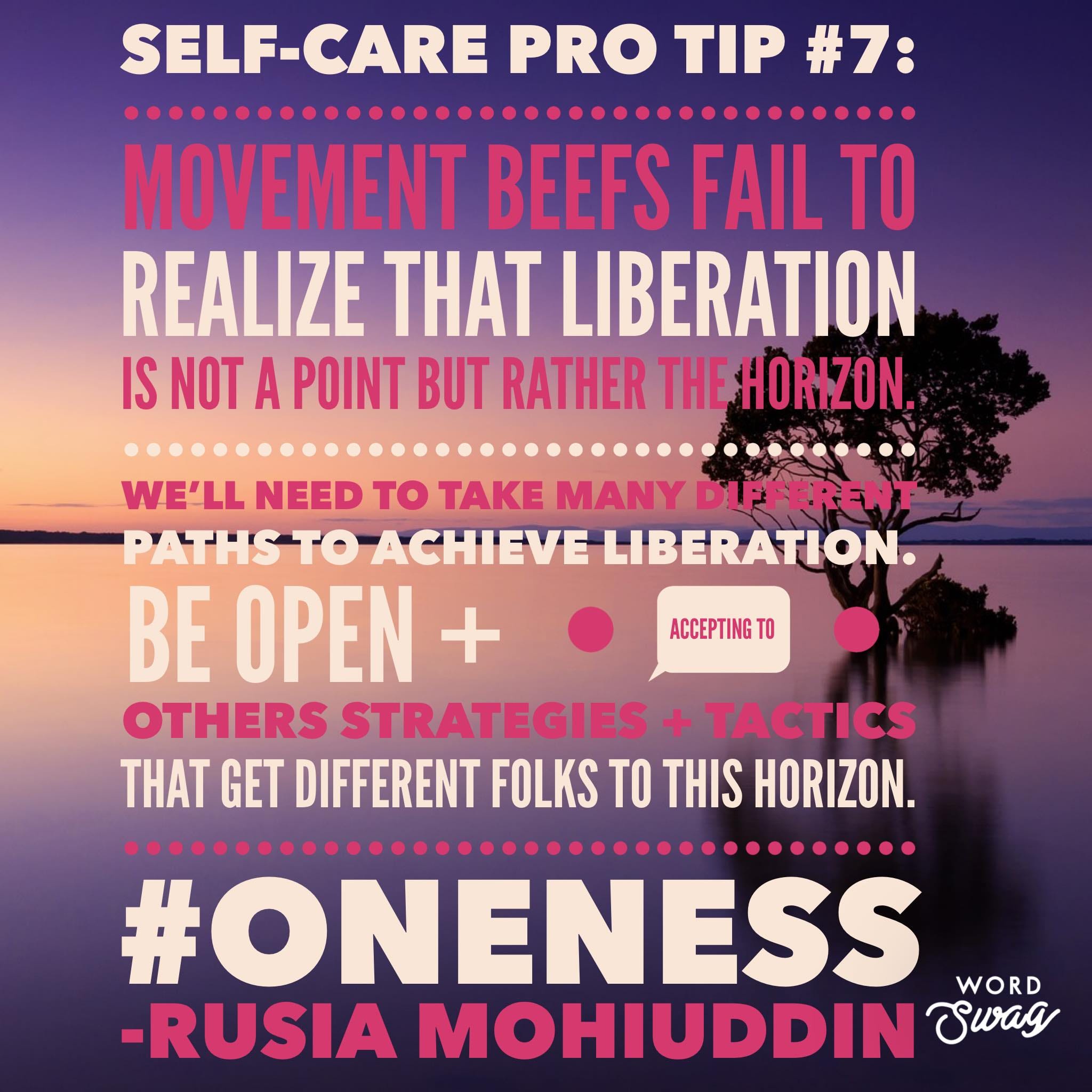
Liberation is not a point in the horizon, it is the horizon. How we achieve liberation requires many strategies and tactics, not one or some. If liberation is our collective movements’ end game, then how we assess political identities needs to be broad in the sense that it is made up of folks who are open and flexible to be moved.

A political identity with a baseline of love that centers dignity, our individual and collective right to be who we chose to be and be seen that way, that this love baseline is enveloped in equity and justice. There are beliefs and traits that ground political commonalities that can define collective political identities without imposing the condition that we must all think, feel, and act precisely the same way in order to be on the “right” side. After all is said and done, sadly, those with acute expectations of the latter may find themselves an army of one. And this will just not do, because we need each other. We need all of each other.

“…we find ourselves living in the chasm of the widening gap of the opposite trajectories of capitalism and humanity.”

So much of what we are fighting for is simple, natural, and logical. The right is extreme and has framed our movement work as radical. What we are fighting for is not radical. It is only convincingly radical (to some) because we find ourselves living in the chasm of the widening gap of the opposite trajectories of capitalism and humanity.

Basic healthcare is not radical, especially during a fucking global pandemic, it is humane.

Housing for all is not radical, it is humane.

Education is not radical, it is humane.

Migration, for whatever reason, is not radical, it is humane.

Working with a thriving wage is not radical, it is humane.

Equity and justice are not radical, they are humane.

The right to live and exist in absence of the fear and the actuality of being gunned down and murdered by public servants is not radical, it is humane.

Can our collective truths be, like in effective grassroots organizing, that we need the people who celebrate, big and small victories? Because we do. We need the folks who call upon us to keep pushing because there is more work to be done. We need the folks who will challenge us to hold the line of what we value the most. And, yes, we need the folks who critique us but without attaching shame to those critiques. We need all these contrasts to work towards our collective goals and liberation.

We need all of us so come as you are.

a cataclysm of love

By UP, UP+love, writings

Humanity needs a mantra. One that we can chant together, that reverberates across the chambers of power in this country and the world. The collective sound of our love and truth that drives out white supremacy from our society, replacing it with the deep knowing that we need each other. We need all of each other. We need a mantra that makes plain that liberation is not a point on the horizon, that only a select few can reach, but liberation is the horizon. It is the only path forward.

We need our collective love to be so intense that every growth burst of that love, every iteration of it, destroys the social and economic constructs that divides us.

Because our society is sick- in every definition of the word and in as many stretches of our imagination as we can think of.

We are sick. Broken: emotionally; spiritually; and physically. And we are deeply heartbroken.

Like our physical bodies, when our society is attacked by an illness of hate, fear, and/or grief, it infects and sickens the entire system. Often, when the sickness is serious enough, or not addressed and healed, our bodies are more at risk of being attacked by other illnesses. Like any virulent illness, the body of our society is susceptible to other infections that further strain our immune system.

The current president, we call him 45, is an opportunistic infection that our already sick society has contracted because we are not healed and have not addressed what has ailed as for so, so long.

The heart of our society, the mirror of truth, is often darkened with the soot of our lies, our greed, our fears, our grief, all frequently sourced in societal constructs that constantly tell us falsehoods about who we are and who we should be.

Lies.

We live in a time where the lie is king.

To date, in just under 700 days in office, 45 has lied in public statements almost 7,000 times. The greater lie 45 relies on, that frames all his other lies, is a historic lie- white supremacy.

Throughout the history of modern civilisation, the white man has wielded incomprehensible violence to subjugate those they have felt inferior to- women, children, people of colour, animals, the earth, and even themselves when the opportunity suited.

There is a Nigerian proverb that says, “a tiger does not need to boast that it is a tiger.” White supremacy is King Joffrey, of Game of Thrones, perpetually screaming, “I’m the king” and, in one scene, being cut down by his grandfather, Tywin Lannister, who reminds him that a true king does not feel the need to repeatedly remind folks that he is king.
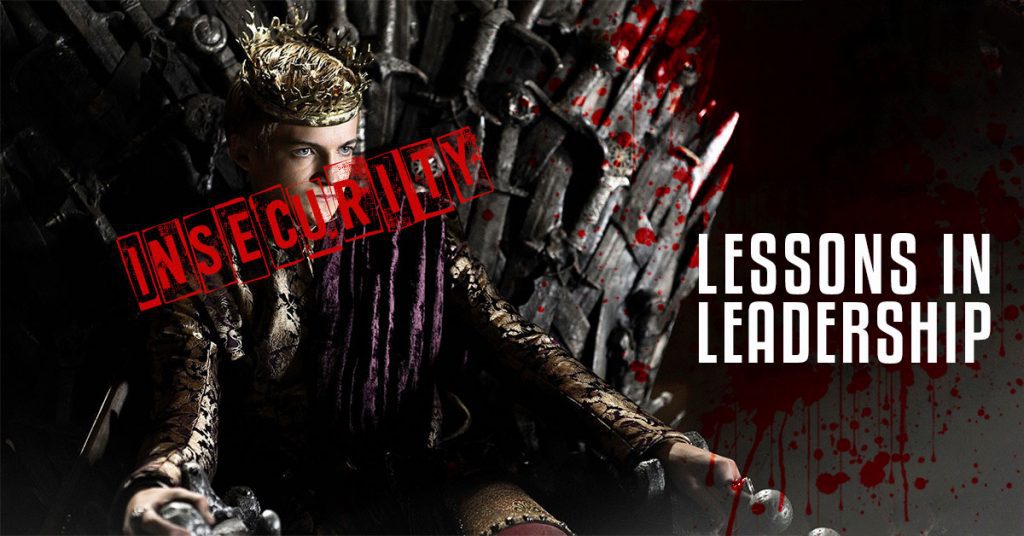
Like King Joffrey, white supremacy went around the world, pillaging, raping, and destroying, all the while repeating the white man’s burden to civilise the savages of the world. And, even more like King Joffrey, white supremacy is just a mask of inadequacy, hiding the deeper truth underneath the veil, of white fragility.

“God bless America!” this phrase has been a staple in presidential speeches and in politics since Richard Nixon and, more commonly popularized, by Ronald Reagan in the 1980’s. The God strategy- God loves America the best and Americans (those from the United States) are God’s chosen people for blessings. America is the greatest land in all of the world. She is the land of the brave! Americans are the greatest people in all of the world and the known universe, dammit! No country and no peoples are good enough for God’s blessings than America and Americans.

In this singular maneuver to distinguish the greatness and exceptionalism of America and other the global populace, it simultaneously others the very people it is meant to elevate by creating an untenable facade of what it means to be an American.

Americans should ask themselves: Do you feel like you’re the greatest? Do you feel like you are the best in the whole world? Do you think the 36% of the voting populace in this country, who are die-hard trumpeters, really feel like they are the best, superior to all others?
Is 45 not the psychological personification of white fragility- the inability to live up to the hype of grotesque and deeply skewed systemic and institutionalized privilege despite how that should effortlessly shape success?

“I’m the best.” “No one can do it except for me.”

His very existence is history-making. But does 45 truly feel like he’s the greatest? He’s an epic failure, in every aspect of his life, despite inheriting wealth and property and despite walking this earth as an elitist, white man. It is not a far reach to imagine, at night, when the lights are out and all is silent, that there is a voice reminding him that he is not who he is supposed to be. A voice saying, “You will never be good enough.”

White supremacy is a cancer of our humanity that persists not merely because white people exist but because white supremacy tells the lie of supremacy over all beings and things. And white fragility persists because, if white people feel inadequate, there must be others to look down upon, to other, to make inferior, so as to dissipate the true nature of the white man’s feelings about himself- that he is not enough.

And white fragility, a multi-strain virus, is wanting to be the best and knowing you are nowhere near that. White fragility is the 36% of Americans who finally have someone who is giving them visibility and saying the things that have been burning in their chests for so long. Someone who sees them and only them. Because institutional white supremacy disappears white people.

Centering whiteness deeply corrodes the bodies and psyches of white people on a cellular level. It has to, in order to spread its contagion. White supremacy preaches that non-white is a problem and it is this very philosophy that offers the cure and the ultimate death of white supremacy.

If we exemplify the colonial, white-centering patterns in which politicians and the media talk about poverty and those in need, we only see non-white folks. When we hear or see the welfare queen, we see Black women and other women of color, despite the largest demographic requiring public assistance is the white, single-parent woman. Sometimes, we even see and hear of folks suffering and in need, and often, these are also non-white faces. This is the disease of white supremacy in action and it disappears the larger population of working class and poor white people.

We other because we feel othered. Whiteness requires contrast, difference, and othering. It cannot exist without it and so it seeks it out. And while white supremacy others all non-white folk, it simultaneously others white people.

How can all that’s happening in this country be seen as God’s blessing? Whether you tell yourself you care or you do not care, the atrocities to immigrants and children, the continued and sustained attacks on our Black communities, does have an effect on you, your psyche, your humanity, your soul. The effects show up in mass shootings, in misogyny, in patriarchy, in racism. It impacts you. It impacts all of us because it’s all rooted in the same thing, the same system, the one collective body of our society.

If Fredrick Douglas was right in saying, “there is no progress without struggle”, then we are living in a golden era of the possibility of the kind of material changes, the antidote to our illnesses, we have been seeking for decades.

While hate may be a highly contagious pathogen, we are all grieving our collective inability to truly nurture and take care of our basic needs.  And, if we lived in a society where loving oneself was easy to come by, we would not have so much time to hate ourselves and each other. We just wouldn’t need to.

We could use a cataclysm of love. That collective love that obliterates the virulent illnesses and opportunistic infections ailing society. An awakening that only love can catalyze in which we realize the hypocrisy of our differences. A love transformation that, makes clear, answers to questions we have failed to ask collectively. Love that makes visible the grief under the masks of anger, hate, and fear.
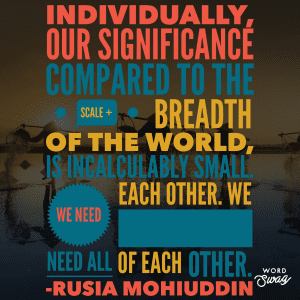
We could use a collective mantra that reminds us that healing and love is the natural center of gravity of who we are. A mantra that reminds us that none of us can fully be who we can be on the backs and suffering of others. A mantra that echoes our joyous truths.

We could use a mantra for all of humanity: we are infinite oneness.
strategies for self-care

By approach, Practice, self-care, UP+love, writings

surviving + thriving

(re)focus

let there be no more doubt… the white supremacy agenda is in full effect, out in the open, and in our faces. what we all need to recognize is that there are #NoSidelines.

while our work seeks to uplift and change the material conditions for ourselves and our people, ultimately seeking to remove the “otherness” label all disenfranchised and people of colour are identified with, we continue to move the focus from ourselves and our wellbeing to the sidelines of our lives and work, with the false perception and understanding, that the work actually needs us to do this.

no. no more.

it’s time to (re)focus.

#NoSidelines is not just about where one falls on any given issue, either by virtue of action or inaction. it speaks to a greater struggle of centering ourselves in our work instead of the capitalistic philosophy of solely centering our labour at the expense of all things. this is the default of too many of us and it simply robs us of choice and power.

the expression of our deepest beliefs, values, and principles in what we say, do, and how we interact with ourselves and each other does not require self-sacrifice and masochistic behavior to be effective and impactful. rather, efficiency and impact is a result of centering ourselves and our wellbeing in what we do because it places our focus on our humanity so it acutely aligns with the work we do in the world. adding more suffering to the existing suffering of our communities is not a methodology of healing, so why do it?

in organizing, effective and authentic community work always keeps the focus on those directly affected, even when the external pressure and the power of our opponents are overwhelming. adopting the most impactful philosophies and methodologies of organizing in how we focus ourselves, our wellbeing, and each other will serve as a grounding in this offering of strategies for self-care.

getting real about self-care

like most things, the more something becomes well-known, the more its true meaning and purpose becomes skewed and watered-down. no real judgement here, just a move towards some aligned understanding of how self-care is defined for the purposes of this guide.

over the last couple of years, self-care has shown up as a hashtag on posts sharing the rare occasions folks have gone to watch a movie, had dinner with friends, or when they have indulged in a mani-pedi. all good… these activities are great and necessary. what they are not, as a stand-alone event, is self-care.

self-care is a practice. a regular practice. an intentional activity we engage in that is grounded in purpose that actually results in something real and measurable. what the results and impact are, is wholly up to you to define.

for this guide and for these times, self-care is an intentional, regular practice that seeks to fortify the individual.

reset + fortify

whether you are on the frontlines and/or directly affected by the growing attacks on disenfranchised communities and people of colour, if you hold true the need for social, political, economic, and environmental equity and liberation for all peoples regardless of race, class, sexuality, or gender, you realise and believe that an attack on one of us is an attack on all of us. while the real-life impact varies, the trauma and hurt on our somas is real whether we are cognizant of it or not. all of us require a daily reset that allows us to (re)connect to our deeper purpose and that which brings us joy and meaning to our lives.

here are some pro-tips on resetting and fortifying ourselves for the long road ahead:

  • identify + lean into choice: everything we do and do not do is a choice even in urgency and times where we feel like we “have to” take action. by orienting to actions as clear, intentional choice, we empower ourselves rather than become subject to what we feel must be done.
  • center yourself + your leadership: if we can hold ourselves in the center of gravity for what we do, we can uphold our humanity and dignity rather than the work itself. doing this is more aligned with the kind of world we are working to create.
  • it’s a marathon not a sprint: meaningful, long-lasting change takes time to break the threshold of current societal patterns and be sustained towards collective embodiment. no matter how much we work or how much we sacrifice, we will not reach our goals in the short term. we must fortify ourselves for the long haul and prevent burnout.
  • lead by example + inspire grounded action: energy is contagious… cross-species contagious. the more grounded and centered you are, the more you will inspire others, from your mere presence. if you desire others to cultivate their leadership to be more balanced and mindful, it’s only logical that you chose to do it yourself.
  • resets are necessary: like a reboot for a frozen computer or device, resets are necessary to move forward and inherently entails a risk or a letting go of something that may be hard to detach from. each of us need a daily reset to re-energize and connect to our deeper purpose, love, and joy.
  • intention + commitment: harnessing your intention to stay committed to yourself, your humanity, your personal leadership, will be a critical way in which you can continuously stay in choice and in your power.
self-care do's

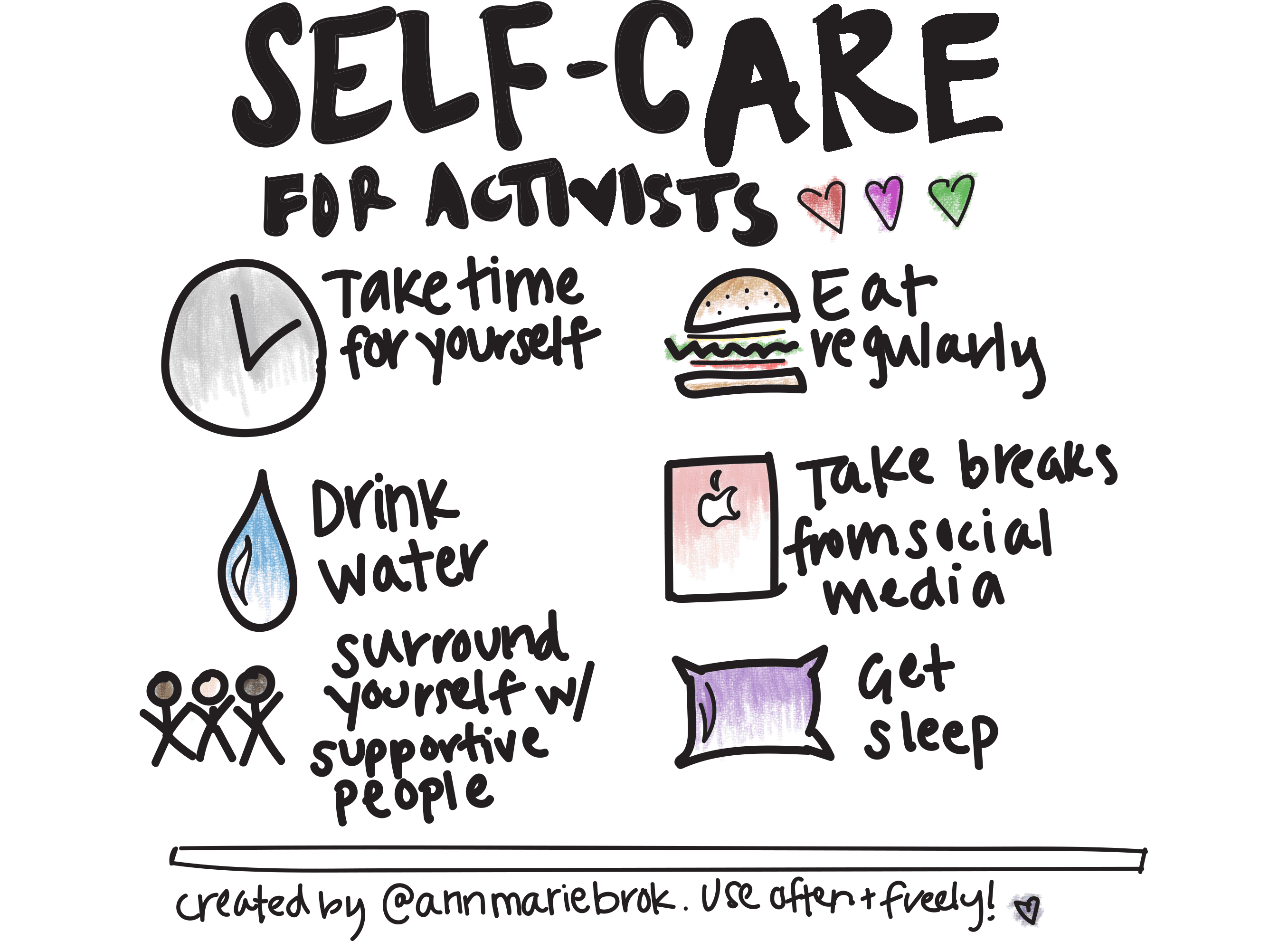
theoretical shit is all nice and what not, but how do you actually practice self-care? sometimes we need some hints or a few practices to begin with to get the practice joints juiced and flowing. here are a few practices that are great launching pads for easily cultivating daily self-care practices:

  • 5-minute meditation– meditation is scientifically proven to sharpen your focus and increase wellbeing as well as dramatically enhance your mood. five minutes a day, regularly, is all you need to reap the vast benefits of this powerful mindfulness practice. check out this how-to video, “mind the gap”.
  • journaling– a daily practice that is aimed at expressing the emotions that have come up during the day. a practice that allows you to track and release the moments and events from the day, including interactions with people, so you may release it from your system and emerge from the day without any extra baggage. journaling can be in the form of writing, video, audio, and/or art.
  • movement-based exercise: move your body! take a walk or a run or spend 15 minutes moving to your fave music. trauma lives in the body and you cannot think or will it out of your system. you must move to expel it (among many other things).
  • stay hydrated + well fed: when emotions are generated in our systems, our bodies are quick to process it and then seeks to expel it with some sort of a release. our cultures continue to shape us to ignore, overlook, and/or numb ourselves out from this releasing process, leaving toxins in our bodies. drink a lot of water and pee those toxins out! eat on a schedule and eat often. set yourself up to succeed and set a timer for meals. your body cannot survive without food and water.
  • siesta time: guess what? just like food and water, you need sleep to survive. a 10-minute power nap (30 minutes is ideal) can save lives, beginning with your own. too many folks are suffering from sleepless nights and especially for those missing sleep, carving out a time for siesta will be vital to the mind, body, and spirit. set a daily alarm for 30 minutes between the hours of 1:00 to 4:00pm and get your nap on.
  • in the moment: when things pile up and you are on the brink or deep in the midst of a trigger, take 3-5 deep breaths AND go for a walk, placing and returning your attention to your breath and steps.
  • listen to your fave booty-shaking music: music heals and can uplift us when we really need it. make a playlist of your favorite songs and arm yourself with it for easy access and use. sing out loud and dance like no one’s looking. let the beat and the words fill you and reclaim the energy and joy that fuels your life.
  • use a mantra: one of the fastest ways to change is by changing what we think. think of the vision that you have for yourself and imagine that you have done all the work required to be the embodiment of that vision. now, create an “I am” statement, short and sweet, that represents that vision, to create your mantra. repeat your mantra 3 times before any interactions and before any act of leadership throughout the day, each time invoking your vision and grounding yourself in the vision of your desired leadership.
  • give + get hugs: humans need human contact. hugs release endorphins and bring content and happiness with each embrace. practice a centered hug (heart to heart hug with 3 synchronized, deep breaths together). please do be in choice and precede hugs by asking for permission (“may I give you a hug”). and remember, no is a very acceptable answer. if you get a no, don’t take it personally but instead celebrate that you and the other person stand in your own power and choice.
  • choose your own practice: any practice that allows you to express and release the day’s emotions and events is a good daily practice. integrating 10-30 minutes to practice self-care that aims to reset and fortify should be required work for all of us.
  • infinite second chances: you only fail if you don’t try again. give yourself infinite second changes to begin anew if you stumble with your practice(s).
self-care don'ts

trauma creates a riff and disruption in our patterns, somewhat similarly to change work. it’s easy to slip into anesthetizing patterns that seem to offer quick, numbing relief from what aches us deep in our hearts. here are a few things to avoid, especially as daily practices/occurrences:

  • alcohol + sugary drinks: alcohol and trauma just don’t mix well together. alcohol contains a high level of sugar that can make you feel physically sick and will disrupt sleep. as much as you can, avoid daily alcohol consumption and other sugary drinks in favor of water.
  • seeking targets: hurt people hurt people, yea? it’s part of our make-up to seek to understand when things aren’t right. often, the less practiced and grounded person, will seek to find targets to lay blame on. and the safest targets are our own people. we need to take care of each other right now and blanket attacks on movement leaders, ourselves, and each other only furthers the trauma and hurt.
  • isolation: as stated above, humans require human contact. isolation can do serious psychological harm and further deepens and creates trauma. stay connected to people in your community. agree to keep conversations light and positive. meet in person or chat it up on phone/video. daily contact is ideal but definitely don’t go more than a week without connecting with someone you care about.
  • intake of news + social media: overload of either will surely bring you down. headlines and news are psychologically crafted to scare us to grab and maintain our attention. too much is certainly toxic and is designed to rob you of your center and ground. each news cycle repeats news from the past cycle. chose a time of day, preferably later in the day, to catch up on the day’s event, limiting your reading/watching to about an hour.
  • traumatic times is not the best time to change hearts + minds: avoid engaging with folks who just don’t get it, especially now while the wounds of trauma are heighten. when you are fortified, grounded, and ready, seek those battles out if you so chose. seeking the understanding of folks who require debate and argument will only serve to hurt and traumatize your more.
  • anything else: you know all the tricks you employ that do not serve you. you also know all the ways in which you need to be to set yourself up to succeed and stay fortified and fired up for the long fight ahead of us all. know how you set yourself up to fail and know how you set yourself up to succeed. chose and act accordingly.

finally, like most things in life, having a plan and a support system makes achieving our goals more possible. download this worksheet to chart your self-care practice towards a more fortified you.

meditation is life

By #30DaysUP, Leadership Dev.

Meditation. It’s been like getting to know an old friend who I haven’t seen in awhile. My mind, my body, my spirit, I find sometimes wishes that it was all I did do most days. Alas, like all things, I simply settle for carving out increasing increments of my new found sitting pra

ctice and it has worked wonders in my life. I appreciate it so much I compassionately try not to starve myself of its magic on a daily basis whether it’s at home, on the train, or on a walk.

Before I was introduced to this practice in the words of Rusia I was, “vomiting my rage” all over the place. Most days I didn’t understand why I was doing it or why I was so easily triggered until I began to reflect on my shape.  The reality was that I did know where the sources of my junk stemmed from and it was time to begin to let a lot of that go.

Meditation has allowed me to calm the racing thoughts that always seem to be buzzing around in my head. It allowed me to see where in my body trauma was still being held and how to incorporate supporting practices that would help me to release a lot of the junk that tends to hold u

s back. I learned to breathe. I mean really breathe. You know, that breath that enters and fills your whole body that leaves you feeling wavy, a natural high.

When I do miss a sit I can feel the difference starting with how I mentally orient to the day. My thoughts will tend to lean more on the cynical side rather than being able to see the options that are available in front of me. When I miss a sit, I can feel the aggression seeping from my pores and my body is poised, ready for confrontation, instead of being able to take a step back and shrug it off. When I miss a sit, I realize that an obstacle that is trying to knock me off my foundation will get more energy from me when I should be walking away giving it none of my power.

Being in practiced as allowed me to see how other people show up and when I find myself laughing at an outburst it’s, because I see old me sometimes, and I realize that what is being thrown my way has nothing to do with me, but something they are internally dealing or not dealing with. I’ve learned it’s not personal, but I’ve also learned not internalize other folk’s issues that they may be dealing with. Meditation has also helped me navigate other people’s energy that for an introverted extrovert can feel not only mentally overwhelming, but physically as well. It’s a practice that reminds me every day that self-love and care is not and indulgence it is undeniably necessary and revolutionary.

The understanding that this will be a lifelong process isn’t scary to me if anything I find that I am running towards it with a ferocity that I often need to remind myself that it’s oki and I am where I need to be in this moment. I am reminded that every intentional choice, relationship, and internal growth is slowly but surely leading me to where I need to go next. I have learned to trust, be compassionate, extend love in a way that is true to my being so that I may move from that place of intentionality.  I have also learned to accepts truths when they are presented to me even when it may not be the words I necessarily want to hear but need to. I have accepted all the pieces that make up who I am and why they are important. I understand that in this moment I embrace change in all its forms and it has allowed me to cultivate more joy, more acceptance, and for more healing to take root in my life.

In the end it’s a choice. I decided that I wasn’t going to deny myself what I deserved and in order to get there I made the choice to step forward and put in the work necessary. It’s oki if I am afraid, it is a natural feeling, its when I choose to be brave and fight against that fear that I come out renewed each time on the other side. I only have this one mind, this one body, my one spirit and I chose to honor her in ways that allow light to shine through even when its hard. There’s nothing that I can say that I regret, but chose to learn from. I own my part, I recognize others part, and I move on. Trust me when I say it doesn’t mean you’re like a bed of roses all the time, hell no, that ain’t realistic. But I find instead of getting angry at myself when I fall off I am reminded it’s cool, reset, start over, every moment is a new moment to recognize what came up and begin again.

Meditation. It’s been a longtime friend of mine now and its one of the best friendships that I could have made for self and in turn others.

exploring human nature: part 4

By transformational, WEL
warriors for embodied liberation (WEL) is an apprenticeship program developed and lead by universal partnership's principle, rusia mohiuddin. WEL is a 2-year training program in which the students learn and practice the core methodologies for embodied training and coaching. as a part of their studies, students explore, learn, and develop pieces on their understanding of many things related to change work. one of the first points of entry, into understand the work UP does, is human nature. what is human behavior and how does change happen? this is a five-part series. each piece has an accompanying audio file for those who prefer to listen to each article on their way to or from work. a playlist will be included at the end of part five.

what is human nature?

by simone devi-jhingoor

Human nature as I understand it is this conscious and unconscious need to operate from a place of ego. According to Eckhart Tolle, “ego is a false sense of self”. It is who we think we are: the story and narratives we create about our selves for us and for others. The more we experience pain and suffering in the form of trauma from those who are closest to us – partners, friends, family members and colleagues – the more we find evidence to believe this story about who we are. Examples are: “I am not loved” or “I am not good enough” or “I am not worthy”. This image or perception of our self is what shapes how we show up in the world. And often this is not from a place of power, truth and authenticity but from a place of falsehood – from our ego. We internalize this image or perception and allow it to impact the way we relate to others.

This “false sense of self” coupled with living in an inequitable and consumer driven world does not help. Instead, we dive deeper into our ego, which feeds our desire to survive at all costs. We strive to feel worthy and alive through the material possessions we attain in our life – a fancy car, high paying job or a big house – and we are then motivated to have more of these things at the expense of what truly brings us joy. Now, I am not saying that it is terrible to have material possessions that we can enjoy – as long as we don’t feel like these things are the only way we will be happy. If we are operating and aligned from a place that is our highest sense of self – our values, vision, passion and purpose – than we can feel the most fulfilled and joyful.

how does change happen in the context of human nature?

Change happens in the context of human nature when we are able to build our self-awareness to recognize the ways that we are holding generations of trauma in our bodies, minds and spirits. We begin to recognize how much pain and suffering we have experienced over time that then impacts how we physically show up in the world and relate to people in our lives. Once we begin to build this level of self-awareness, it is the first step to beginning a life-long journey of healing to release trauma and all the false images of our selves that we no longer need. We are able to move through the world from a place of love and not ego. We can work on disrupting patterns that hold us back and instead, focus on aligning ourselves to operate from our highest sense of self, which is from a place of vision and purpose. And we are also in more choice. We no longer need to find evidence to support a false image or perception of our selves, because we are in our true and authentic power.

exploring human nature: part 3

By transformational, WEL
warriors for embodied liberation (WEL) is an apprenticeship program developed and lead by universal partnership's principle, rusia mohiuddin. WEL is a 2-year training program in which the students learn and practice the core methodologies for embodied training and coaching. as a part of their studies, students explore, learn, and develop pieces on their understanding of many things related to change work. one of the first points of entry, into understand the work UP does, is human nature. what is human behavior and how does change happen? this is a five-part series. each piece has an accompanying audio file for those who prefer to listen to each article on their way to or from work. a playlist will be included at the end of part five.

human nature

by jaritza geigel 

It’s knowing the difference between wanting you and needing you. That when I feel I need you that’s just the loneliness talking telling me to run back to what I used to understand as safety but knowing it will only cause the same harm it did before.

It’s being unused to letting go even though I feel lighter; clearer. It’s reminding myself everyday that our plans can change and it can be a good thing. It’s not taking what’s in front of you at face value and wondering if you’ll take the leap to see the layers beneath the surface.

It’s choosing to stay in the same state of survival that you’ve learned through your adolescent experience or deciding to make some real shifts so you can move into action that propels you further in your life.

Human nature is when you look for others to fill in the gaps of what we feel are missing when we should be looking internally within ourselves.

It’s when a man says he down to be your friend after you turn him down, but doesn’t reach out because we both know what he wanted to hang around for. It’s reminding myself in those moments not to take it out on the rest of the humans of the world.

It’s understanding that the world doesn’t revolve around any one individual and so we all impact one another.  The only thing you have control over is yourself and how you want others to experience you. It’s also accepting people change and not always when or how you need them to.

It’s having my heart catch up to what my mind has accepted and acknowledges.

One thing about human nature that is definite is that whether it’s for better or for worse people change.

exploring human nature: part 2

By transformational, WEL
warriors for embodied liberation (WEL) is an apprenticeship program developed and lead by universal partnership's principle, rusia mohiuddin. WEL is a 2-year training program in which the students learn and practice the core methodologies for embodied training and coaching. as a part of their studies, students explore, learn, and develop pieces on their understanding of many things related to change work. one of the first points of entry, into understand the work UP does, is human nature. what is human behavior and how does change happen? this is a five-part series. each piece has an accompanying audio file for those who prefer to listen to each article on their way to or from work. a playlist will be included at the end of part five.

how does change happen in the context of human nature?

by elena conte

Human nature tends toward suffering because of the illusion of a separate self. This takes on many different forms in small and large ways.  At the same time, the tendency toward suffering is the layer that interferes with us accessing the perfect, inherent goodness of every person. So, human nature is also perfect, inherent goodness.

Change is the process of waking up to that inherent goodness through compassion for “self” and “other” and manifesting it in community and in harmony with nature — experiencing that we are not really separate, but completely interdependent.

Change comes from within, and through the way that we are transformed and transform others in the power of relationships.  As we strengthen our ability to know and love ourselves, our ability to love and know others is enhanced, and from there collaborations are built that form communities, organize ourselves, and create institutions that support the values of justice we want to see in the world.

There are counter forces that are deliberate, and rooted in the deep, unexamined and unhealed suffering of the perpetuators of violence, greed, de-humanization of the “other”, environmental degradation, etc. There are parts of all people that have the ability – and inclination – to cause harm to others. There are lots of ways, personal and political, to wake people up and interrupt those processes.  Reconnecting with one’s humanity and helping others to do the same are at the heart of the “waking up” process.


exploring human nature

By transformational, WEL
warriors for embodied liberation (WEL) is an apprenticeship program developed and lead by universal partnership's principle, rusia mohiuddin. WEL is a 2-year training program in which the students learn and practice the core methodologies for embodied training and coaching. as a part of their studies, students explore, learn, and develop pieces on their understanding of many things related to change work. one of the first points of entry, into understand the work UP does, is human nature. what is human behavior and how does change happen? this is a five-part series. each piece has an accompanying audio file for those who prefer to listen to each article on their way to or from work. a playlist will be included at the end of part five.

what is human nature?

by rae leiner

What is human nature as you understand it? How does change happen in the context of human nature?

As I understand it, human nature is a core pattern of behavior that is somewhat developed from early childhood and on going through adulthood but also informed by primal behaviors inherited from human evolution.

I believe there are arcs of human behavior that are influenced by human nature and these patterns range through all human experience, for example the fight or flight pattern or survival of the fittest.  That human nature has evolved over time, has helped to inform emotional intelligence and behavioral patterns.

I feel as though there are layers to human nature that are influenced on a physiologically level, that biologically we carry information that informs aspects of our knowledge, wisdom and informs our trauma.  I also believe that trauma is passed on from generation to generation, that physiologically we are informed by knowledge that sometimes we don’t know how to access but is ever present and presenting itself to us.  A lack of connection to the knowledge influences us on a psychological level, either allowing us choice or limiting our choice.

I’m not sure if human nature changes, there is something about it that feels instinctual and primal even.  I do believe that it does inform behavior and that patterns of behavior can change more so than human nature. 

belongingness in the age of voldemort

By writings

The first known use of the word “belonging” was in 1782 and spoke to an essential human need, both emotionally and physiologically, to be accepted in one’s environment, to be loved and to be able to give love. Belongingness is attributed to being one of the strongest desires in human nature simply because the lack of which produces detrimental consequences in individuals and groups on a variety of levels.

Like survival, the emotional need for belongingness is something we most often fight to have and keep. And, as with love, connection, and safety, belongingness is a part of the critical foundation on which well-being is built.
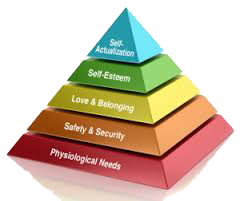
imagesAmerican psychologist, Abraham Maslow, developed the hierarchy of human needs, in which the third level is associated with love and belonging. While Maslow’s observation-based theories focused on “super humans” like Einstein are not without controversy, the work speaks both broadly and acutely to the understanding of modern sociological conditions. If we look at belongingness in a political lens, we may come to understand what led up to the election results of 2016 and what and where we may need to shift in addressing the anger, fear, and despair the majority of us are experiencing.

To begin, I assume the following things in this discourse:

  • Like love, safety, and connection, the need for belongingness is essential to our survival;
  • When belongingness is taken or denied, we will fight to regain/establish it or we will give up our very lives rather than live without it
  • Belongingness is necessary for our well-being, the effects of which deeply impact our psychological, physiological, emotional, and spiritual states
  • There is a real connection between dis-ease and disease

Are social and political movements essentially about a deeper need to establish belongingness? Of course, the desires and purposes of our movements are multi-layered and difficult to simply reduce into one thing or another. However, if we view movements from the angle of human yearning, are we not fighting for belongingness, to feel and be a part of something beyond just ourselves?

Using immigration as an example, Deferred Action for Childhood Arrivals (DACA) and Deferred Action for Parents of Americans and Lawful Permanent Residents (DAPA), while fighting to gain documented status for millions of immigrants living in the United States, helped to establish social and economic belongingness. For DACA, the real sense of belonging to a larger community of the U.S., enabling millions of youth to emerge from the shadows of fear.

And now, with the promise to repeal DACA, millions of youth have been told by the highest office of this nation, “no, you do not belong.” Is it any wonder that at least seven DACAmented youth have committed suicide since last week (that we know of)? And the explosion of #HereToStay statements and actions across the country?

The same social formula can be applied to the LGBTQ+ movements. Big victories establish acceptance and belongingness, where for too long LGBTQ+ communities were (and continue to be), structurally and systemically, denied basic human rights and treated as others and second class citizens. Now, with the Vice President-elect, proclamations and promises are being made to roll back and take away the progress so many of us fought long and hard to gain.

I could go on.

All throughout the campaign trails, we heard about how white America, lacking a sense of belongingness in a vastly and rapidly changing America, can reclaim their belongingness by fueling hate geared to deny belongingness of so many other people. And it worked. He-who-shall-not-be-named, takes the reins of power in as little as 70 days.

I know there is, seemingly, an infinite amount of data and analyses on what happened November 8th, 2016. I suspect we will talk about it for some time. What is clear to me is that 46.9% of the voting populace did not even cast a vote (source: United States Election Project). Why is this? If the 46.9% of the people felt belongingness, barring any other restrictions, do you think they still would have chosen to disengage? I would venture to say that the majority of these people would have engaged and we would be looking at a different kind of future.

We live in a culture where community and humanity are not priorities in the sense that we care about what happens to all of us. I do believe that the majority of us are, in fact, lead by love and compassion. And while we are fighting for ourselves, our families, and our communities, to (re)establish belongingness, are our words and actions possibly or directly robbing others of their sense of belongingness? When we say that all the people who voted for he-who-shall-not-be-named are racists, are we not automatically saying they are not a part of who and what we are and thereby denying them a sense of belonging?

So many of us are rightfully grieving. As a response, too many of us are defaulting to reassuring people that it’s going to be okay and we will survive. We should know that this is not true and already, some of us have not survived. Today is day 8 post-elections. Day 8.

My assertion is that it is more than fine and wholly appropriate to not be okay. What has and is happening, is not okay. So why and how can we expect us to be okay despite this? I also assert that we can act, with determination and love, while being “not okay”.

Instead of deepening the groove of the pattern of wanting to take care of others as a way of dealing with our own discomfort, let’s be in community and create belongingness for ourselves and each other. Let’s tell and show ourselves and our most vulnerable that we are not alone in what we are feeling by creating real and virtual spaces for us to share and hold each other.

Most importantly, let’s practice to put away our fragile egos and support each other so our work can be aligned with our deepest values and principles. So we may fight for a world in which belongingness of others is not a compromise we must make for our own.

changing you IS changing the world.

#roosterQuotes

the “I” in “We”

By approach, Org. Development, writings

The “I” In “We”
The Need For Personal Growth in Organizational Development

By Rusia Mohiuddin
originally published in OD Network (Winter 2016 Vol. 47)

The focus in traditional organization development (OD) has often concentrated on collective practices, structure, and overall impact of the work based on internal alignment and effectiveness. Even today, with the explosion of transformative principles and practices, movement organizations, known for innovation, continue to sharpen internal processes in absence of developing deeper knowledge of individual leadership that makes up the collective. For the past ten years, my work with social justice organizations and networks, has concentrated on shifting this paradigm, seeking to acutely align organizational values and principles with the individual leadership that makes up the whole.

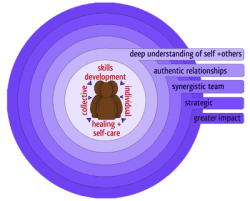
UP_approach_graphIn 2006, I pioneered the integration of somatics into an organizing framework resulting in a new, holistic model for community organizing known as Embodied Organizing. Somatics is a sophisticated methodology, universally transformative, combining the biological, physiological, and social sciences to provide a framework for individual and collective analysis and action. The term somatics is derived from the Greek work “soma”, which means the body in its living wholeness. The core ideology of somatics posits the undeniable interconnection and indispensable balance of mind, body, and mood both on the individual and collective levels.

Specifically, in the context of OD, somatics beckon us to see individuals as the make up of the collective and allows us to explore and understand the need for individual growth towards collective growth. In this, redefining the center of gravity for organizational capacity building, my work develops a path to see and adjust individual and collective patterns that directly inform external organizational strategies. My work found that the structural impact on organizations that prioritize individual leadership and self-care practices, develop a depth of trust and rapport among colleagues that radically allows for optimistic and achievably ambitious goal setting and heightened aligned confidence that drives increased team performance.

Movement folk tend to do this work because it connects deeply to their own beliefs that allow us to progress toward a world that uplifts our collective humanity through equity and justice. We do this work because it speaks so intrinsically to a deeper calling we may have that is grounded in empathy and compassion for all human beings. So, shouldn’t our work feel good? Shouldn’t our work be both individually and collectively generative? What happens as we develop embodied patterns of doing movement work over the years?

Service as self-neglect.

Often, my clients tell me, the measure of their effectiveness and impact is their ability to get their “hustle” on. They are commended only when their “hustle” leads to external impact that results in a successful action or meeting. Their “hustle” or ability/willingness to work incredible hours, often to their own physical and mental determent, is a requisite to performing their jobs well. This work, or hustle, has become imperative within our movements, as organizations, in order to remain competitive and relevant for funding, take on workloads far beyond their physical capacity. Ironically, this hyper focus on collective performance at the expense of, and in absence of individual growth and development, secretly disappears the acts of sabotaging an organization’s capacity for sustaining effective action. The constant push to hustle becomes increasingly ineffectual because we do not create balance that respects our need to replenish our physical, emotional, and mental health. Instead, individual deterioration leads to increased cynicism, diminished temperament, and trust within relationships, that result in decreased desire to do the work and our ability to collectively vision and take action.

Ultimately, our organizations become microcosms of the communities we serve, where the same cycle of self-neglecting service in which community members take on burdens of economic and social disparity to get by in life. Organizational teams mirror the effects of oppression, that negatively shape the communities we serve, reinforcing a lack of self-worth and cultivating mistrust in ourselves and others that inevitably recycle the wounds of oppression within ourselves and our relationships.

When we seek community change and empowerment, we do so through individual leadership development. Supporting the transformation of individual community members to reclaim their power and act on behalf of themselves. We understand that these individual community members must experience a personal arc of change that allows them to shed false narratives that impede their ability to take action and engage them in leadership development that provide the tools with which they take action. In this context, we understand the power of individual realization and growth as imperative to the development of collective power. Yet, most organizations do not make the natural leap that our organizations and our impact require the same investment in the individuals that make up the organization’s collective.

My consulting work seeks to dismantle this paradigm where the measure of organizational success is built on the hustle of individual team members. Instead, my work invites organizations to see individual growth as a critical component to organizational development. One of the key methodologies I use to espouse this principle is based on a tool I created called, “Building the Core”. This tool seeks to acutely align the values and principles of an organization with the collective actions of the team. The collective development of this exercise is always preceded with team members developing their own individual “cores” so as to inherently see how individual patterns deeply shape and impact the collective. We do this by identifying what emotions and values are cultivated that cyclically impacts what we literally think and what we practice.

The impact of this pedagogy has been multifold. The results of integrating somatics into OD allows us to see the parts that make up the sum. In so doing, organizations are able to:

  1. Uplift and respect the humanity of individuals while also increasing impact and efficiency. This is directly achieved by decreasing burnout so the work of individuals become more effective and take less time to accomplish;
  2. Cultivate authentic relationships, both internal and external, because the work of somatics allows us to feel ourselves more thereby increasing our ability to feel others;
  3. See where there are collective patterns that work against and/or are not intuitive to the work, allowing teams to somatically and intelligently chose to engage in more aligned practices; and
  4. Reclaim the joy and contentment that should inherently be a part of the privilege to live our purpose through what we do in the world.

I am constantly amazed by what organizations are able to achieve under the most egregious odds, both externally and of their own making. My desire and my own life’s calling require me to support organizations to cultivate individual and collective leadership so their success… our success, can be free of self-sacrifice and the fulfillment of our deepest yearnings for a better world.

vomiting rage

By approach, Leadership Dev., UP, UP+love, writings

atomic_particleIn the 5th century, Greek philosopher Democritus, first theorized that atoms are constantly moving. Today, we understand that these building blocks of matter are, in fact, in constant motion and that this activity produces energy.
Scientifically, in the most remedial sense, we are made up of atoms therefore our matter is perpetual energy. And from science to spirituality alike, we know and have experienced that energy is contagious, cross-species.

The nature of our bodies have built in mechanisms to internally produce and absorb energy, as well as physical responses to expel energy that our bodies have absorbed and/or processed and no longer have use for or require. These responses, known as instinctive reflexes, are true for all human beings regardless of race, nationality, economic status, age, or any other variance of uniqueness.

Screen Shot 2015-10-12 at 2.13.39 PM

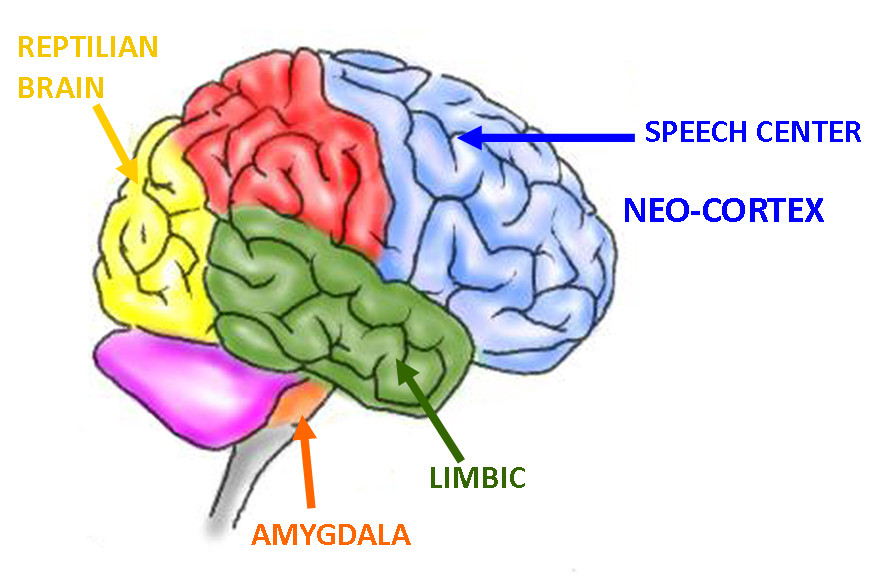
Like instinctive reflexes, each of us has a developed survival strategy, an automatic response to perceived or actual threats to our being or ego. Whether one’s survival strategy is flight, fight, freeze, or appease, the physiological and neurological results are the same- dilated pupils, goosebumps, sweating, increased blood pressure, increased heart rate and widen bronchial passages, and the takeover of the amygdala that simultaneously shuts down the neo-cortex, the part of our brain that controls higher functions like logic and reason.

While some science can be absolute and universally true for all human beings, the many variables and how society defines who we are through such things as privilege, race, ethnicity, “gender”, sexuality, economics, and environment, all add layers of complexity to understanding how these universal scientific truths shape and impact our bodies, our relationships, and our lives.

bio-reactionLet’s put all of this into context… Imagine you are walking down a busy street. You are in a spectacular mood as the sun is shining and the birds are singing. You’re on your merry way and, all of a sudden, someone bumps into you. Hard. And without breaking their stride, they bark something accusatory at you as you absorb the hit and have instantly been triggered into your survival strategy. Now, you are not so merry. Now, you may even be angered, upset, or even scared but regardless, there is an electric tension that has you alert and has dramatically shifted your mood. This transfigured energy is now yours with the potential of passing it along to someone else you have an intentional or unintentional interaction with either on the street or wherever you were heading.

This is vomiting rage.

If we introduce social science into our understanding of energy and survival strategies, we can further analyze how deeply impactful the variables, that socially define us, can have in our lives. The more intersections of race, class, ethnicity, religious belief, sexuality, “gender” and other identities that we may choose, the greater oppression one likely will experience across the board.

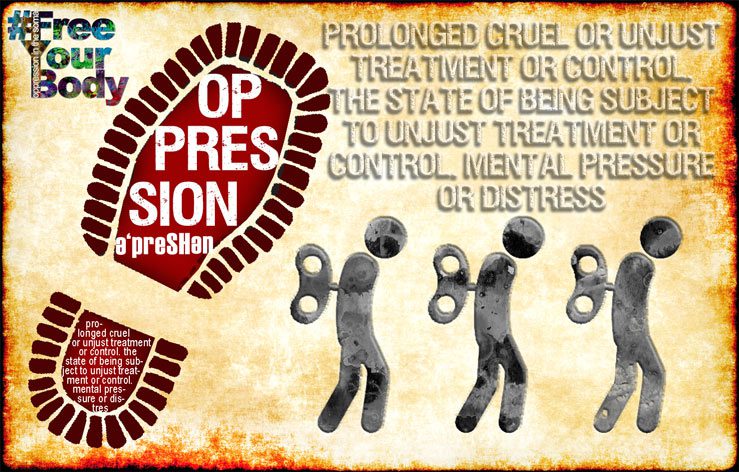
While oppression is largely understood as being external systems, policies, and beliefs (that negatively impact everyone who is not a young, white, Anglo-Saxon, able-bodied, heterosexual man), somatics and other social sciences teaches us that oppression is alive in our bodies and live in the very muscular make up of it.

oppinsoma3graph

Triggers awaken our survival strategies.

Oppression is a trigger.

Constant oppression is a constant trigger.

Therefore constant oppression creates a constant state of survival.

On an individual level, oppression can force one to be in a constant state of trigger and thereby in a constant state of survival. Habitual patterns of being are intrinsically shaped by experiencing life from a perpetual state of survival that inherently define the quality of life, one’s orientation to the world, and personal and professional relationships. Essentially, one’s personal resources, or leadership, is centered around and grounded in our conscious and unconscious patterns.

On a collective level, communities prone to feel the full brunt of the impacts of oppression, by design, will exhibit similar patterns from being in a collective state of survival. This collective state of survival can be seen in a plethora of social inaction such as voting as worthlessness, isolation, distrust and feelings of vulnerability are staples of constantly being in one’s own survival strategy.

And what happens when individuals and communities, constantly living under the boot of oppression, experience themselves and each other in a constant state of survival? We live our lives and our interactions are shaped by the live wire that our bodies are forced to remain in. That is, we are the person who is violently bumped into on the street only, every step we take has us being bumped and triggered along the path of our lives.

There are many antidotes and methodologies that support individuals and communities to reclaim their power and their lives that serve as a lifeline to undoing the deep patterns of constant survival mode. Social justice work across the globe does this work most brilliantly. Over the last decade or so, social justice movements, integrated with somatics and healing, works to address the individual and collective shaping that occurs from various forms of oppression.

Our experiences from being in a constant state of survival require each of us to do some inner work that materializes into outer impact. Otherwise, we are likely to perpetuate negative energy onto each other because we have not developed patterns to disrupt our shaping from oppression. The dis-ease of energy produced from oppression will literally live in our bodies until it is reactively released. When we do not or cannot make space to deal with the deep impact of oppression on our individual beings, we inevitably partake in a cyclical pattern of reactively expressing oppression, from the inside, to others around us.

This is vomiting rage.

It is our duty to know ourselves. It is our duty to truly understand who we are and how we came into our ways of being. It is our duty to know and regularly reflect on our ability to accurately align our values and principles with our actions. We owe it to ourselves first and then to one another.

Our individual change process is intertwined with our collective ability to change. This is how we create sustainable change in the world.